




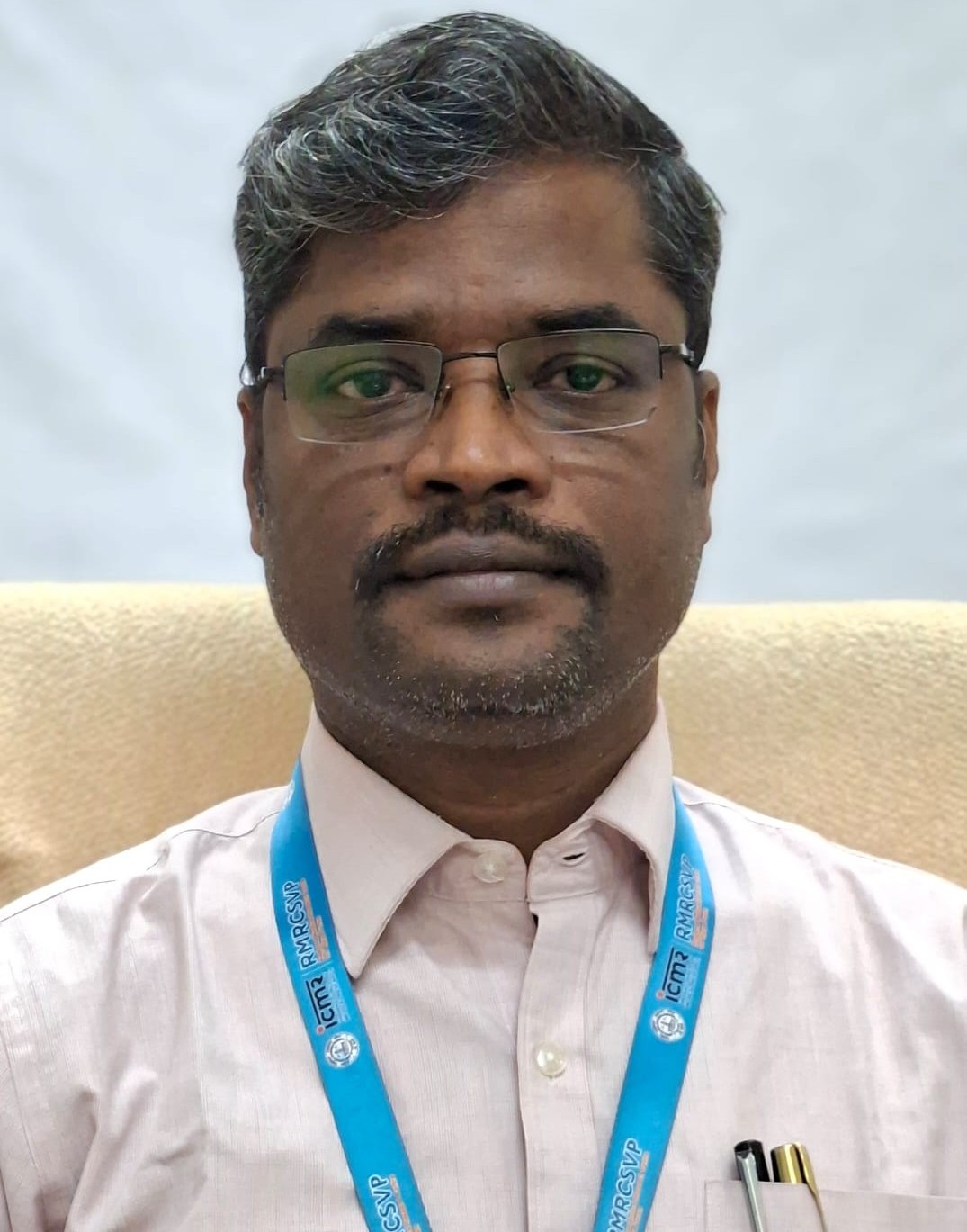
Dr. N. Muruganandam
Research Profile
Dr. N. Muruganandam is a public health microbiologist with expertise in emerging infectious diseases, medical virology, medical bacteriology, immunology, molecular diagnostics, kit development, and biosafety laboratory systems. His research is particularly focused on infectious diseases affecting the Andaman and Nicobar Islands, remote and far-flung populations, and tribal communities, while also extending to mainland India.
Starting his career as a Tutor at A V Medical College, Pondicherry, his research has evolved from diagnostic virology and chikungunya research to multidisciplinary investigations encompassing respiratory viral infections, leptospirosis, sexually transmitted infections, genomic surveillance, and point-of-care diagnostics.
Scientific Contributions
Island-Specific Epidemiology & Surveillance
Developed island-specific evidence on infectious diseases through molecular and epidemiological studies among tribal and non-tribal populations. This includes the molecular characterization of viral pathogens causing influenza-like illness in Nicobar, childhood diarrhoeal disease, high-risk viral pathogen surveillance, and HPV/STIs.
Diagnostic Technologies & IPR Innovation
Translated research into tangible diagnostic innovations, holding multiple registered/accepted IPR/design developments. These include portable immunoassay devices (VCHARI and PVCHARI) and microscope-related image stabilization devices (MUNISH and MUNISVR), specifically intended for resource-constrained settings.
Public Health Interventions & Vaccination
Contributed substantially to leptospirosis diagnosis, pathogen characterization, and novel vaccine development. Importantly, his research findings have actively contributed to vaccination strategies in the islands and the initiation of immunization activities among the particularly vulnerable Jarawa community.
Biosafety & Laboratory Capacity Building
Contributed to national and international laboratory capacity building, including training programmes in leptospirosis diagnosis, infectious disease surveillance, and COVID-19-related laboratory science. He has also provided expert input for BSL-2 and BSL-3 laboratory design at multiple ICMR and medical institutions.
Current Focus & Significance
His current portfolio is centred on strengthening infectious disease preparedness and diagnostic capacity in the Andaman and Nicobar Islands. Major ongoing areas include SLVRDL capacity building, Influenza and COVID-19 surveillance through the DHR-ICMR VRDL network, leptospirosis point-of-care diagnostics, and One Health zoonotic disease surveillance as Regional Coordinator for the NCDC.
His work addresses the distinctive challenges of infectious disease surveillance in geographically isolated settings by connecting scientific investigation directly to public-health action. Characterized by a strong translational orientation—from pathogen discovery to diagnostic innovation and workforce capacity building—his research contributes to building a resilient infectious-disease surveillance ecosystem for far-flung island populations.
Ph.D. Students Trained
Dedicated to rigorous academic mentorship and institutional capacity building in biomedical sciences, guiding scholars from prestigious universities across the nation.